
The Regional House of Representatives (DPRD) of the Province of East Java Budget Committee Highlights Regional Revenue Projections for 2026
The Budget Committee (Banggar) of the East Java DPRD highlighted the 2026 regional revenue projection, which is considered stagnant and potentially lower compared to 2025.


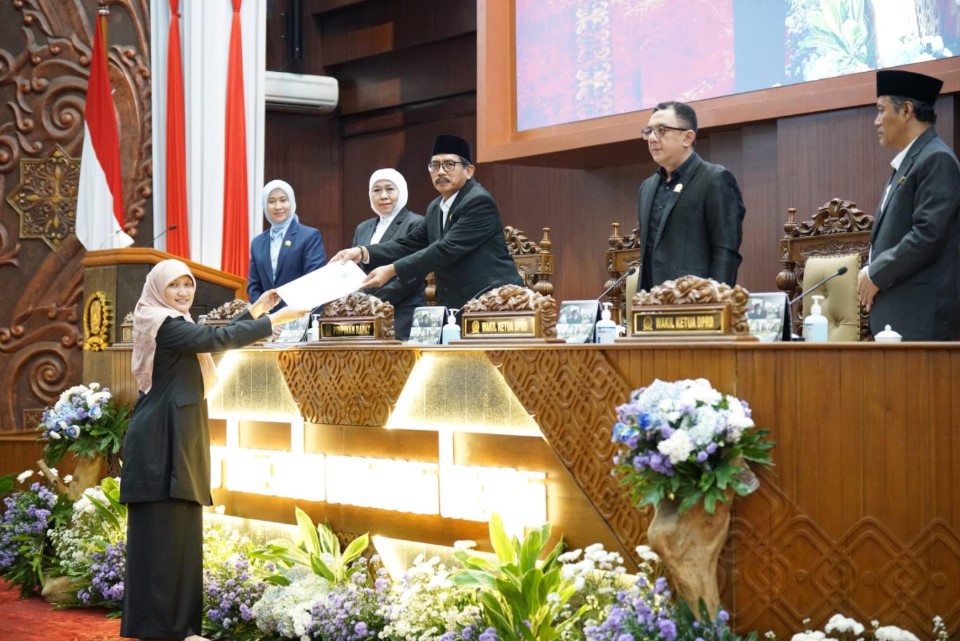
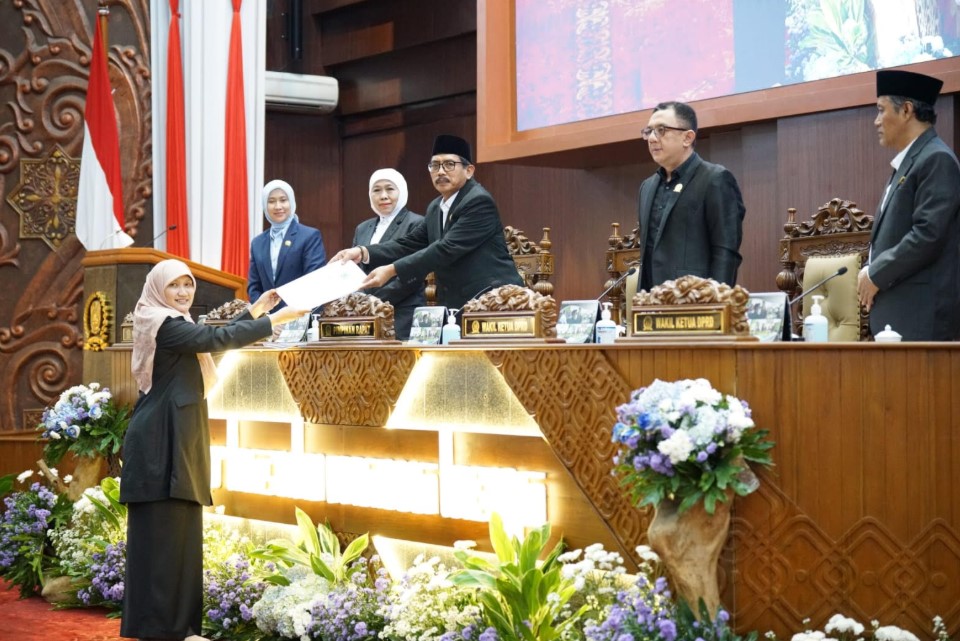
In a plenary session held in Surabaya on Monday (22/9/2025), Banggar spokesperson Lilik Hendarwati stated that the governor’s financial memorandum projects regional revenue for Fiscal Year 2026 at only Rp28.263 trillion.
“Our regional revenue is experiencing stagnation. In fact, in aggregate terms, it is projected to decline by 1.2 percent,” Lilik stressed.
The detailed 2026 revenue projection includes Regional Original Revenue (PAD) amounting to Rp17.240 trillion, transfer revenue at Rp10.994 trillion, and other legitimate regional income at Rp28.15 billion.
The woman, who is also the Chair of the PKS (Partai Keadilan Sejahtera) faction, believes that this downward trend should serve as an early warning of the decreasing fiscal capacity of regional governments to fund expenditure components.
Therefore, the East Java DPRD Banggar recommends several measures, including reviewing the potential for increasing Regional Original Revenue (PAD), which is projected to grow only 1.8 percent, far below East Java's economic growth assumption of 4.8–5.6 percent.
In addition, she continued, it is necessary to rationalize the regional tax target, which is projected to increase by only 2.2 percent.
As well as conducting a comprehensive mapping of retribution revenue and the results of managing regional assets which remain stagnant.
In addition, Banggar also encourages the relevant commissions in the deliberation of the 2026 draft of the Local Government Revenue and Expenditure Budget (APBD) to not merely accept explanations from Regional Government Agencies (OPD), but also to set more realistic Local Revenue (PAD) targets, including from the utilization of regional assets that are still idle.
The Banggar further emphasized the importance of optimizing the performance of Regional Owned Enterprises (BUMD) so they can contribute more significantly to PAD.
Based on an evaluation BUMD are deemed unhealthy and actually burdens the APBD, the DPRD is open to forming a special committee (pansus) to ensure effective intervention.
In addition to BUMD, the private sector is also encouraged to contribute through Corporate Social Responsibility (CSR) programs to support finance regional development.
The Banggar recommends drafting a roadmap for the management of Regional Public Service Agencies (BLUD) to become more budgetary independent, as well as accelerating regulations for the implementation of the Sister Hospital Program to equalize the quality of health services in hospitals owned by the East Java Provincial Government.
During the session, Banggar also addressed the issue of granting subsidies for the education sector.
Lilik said that the grant assistance is expected to be directed more towards private Madrasah Aliyah, which are considered to still require additional support.
“If public Madrasah Aliyah have already accommodated through the Ministry of Religious Affairs' budget, then this grant would be more appropriately directed to private schools,” said Lilik.
Regarding the projected decline in transfer revenues from the central government in 2026, the East Java DPRD Banggar urged that each commission to ensure that partner OPD prepare expenditure efficiency schemes as a precautionary measure.
Through these recommendations, the East Java DPRD hopes that the 2026 regional revenue projection will be more realistic while maintaining fiscal stability to support priority development programs in the province.