
The East Java DPRD Amends Draft Regional Regulation on Disability to Protect Human Rights
The East Java Regional House of Representatives (The East Java DPRD), through Commission E, is promoting a human rights-based Draft Regional Regulation on Disability to strengthen protection, inclusive education, employment opportunities, and access to public services for people with disabilities in East Java.


The East Java DPRD Promotes Human Rights Protection for People with Disabilities
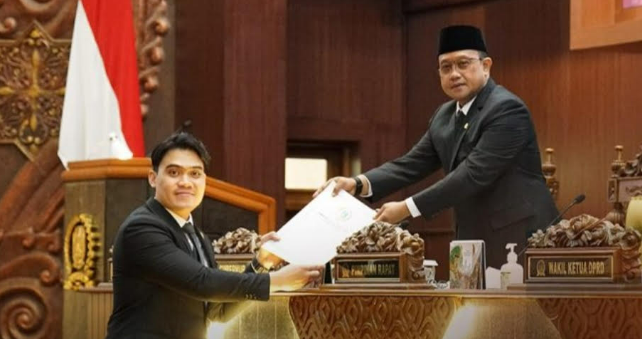
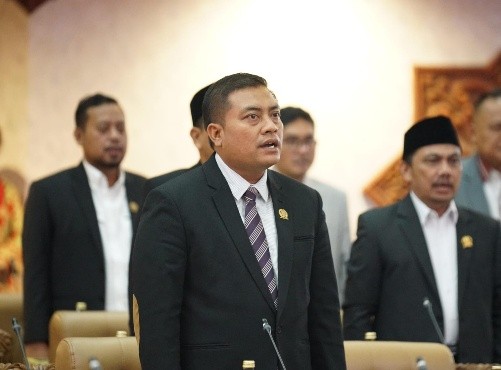
SURABAYA — Spokesperson for Commission E of the East Java DPRD, Cahyo Harjo Prakoso, emphasized that the rights of people with disabilities are an integral part of universal human rights. Therefore, the government has an obligation to ensure equal protection, public services, and respect for the rights of people with disabilities without discrimination.
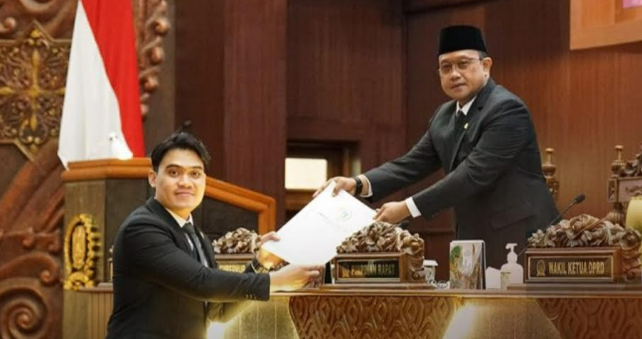
“The protection of people with disabilities should no longer be based on a charity-based approach, but rather on a human rights approach that recognizes people with disabilities as equal members of society,” he said while presenting the explanatory memorandum for the Draft Regional Regulation (Raperda) during the East Java DPRD Plenary Session on Tuesday (09/06/2026).
According to Cahyo, the enactment of Law No. 8 of 2016 on Persons with Disabilities marked a significant shift in Indonesia's legal framework for disability protection.
“The law replaced Law No. 4 of 1997, which still viewed people with disabilities primarily as recipients of social welfare assistance,” he explained.
Disability Data and Access to Education Remain Key Challenges
Cahyo noted that people with disabilities in East Java continue to face significant barriers in exercising their fundamental rights, including access to education, employment opportunities, disability-inclusive public services, and freedom from social stigma.
Nevertheless, he observed that technological advancements and increasing public awareness have created greater opportunities for people with disabilities to live independently and participate actively in regional development.
He further explained that East Java has a substantial population of persons with disabilities. According to Statistics Indonesia (BPS) 2020, approximately 3.42 million people, or 8.41 percent of the province's population, were identified as people with disabilities. Meanwhile, the National Integrated Socio-Economic Data (DTSEN) recorded 1.86 million people with disabilities as of August 2025.
“These differences in data indicate the need for a more accurate and integrated database to ensure that public policies are properly targeted,” he said.
Cahyo also highlighted the continuing gap in educational access.
“According to BPS data for 2024, educational attainment among people with disabilities is still dominated by elementary school graduates, while relatively few have access to higher education,” he added.
Regional Regulation on Disabilities Strengthens Inclusive Education and Employment Opportunities
Cahyo noted that similar challenges persist in the employment sector. Of the tens of thousands of companies registered under mandatory employment reporting requirements in East Java, only a small proportion currently employ persons with disabilities.
“In accordance with prevailing laws and regulations, government institutions, Local-Owned Enterprises (BUMDs), and private companies are required to allocate employment quotas for people with disabilities,” he stated.
According to Cahyo, the proposed regional regulation has been drafted to address the broad range of challenges still faced by people with disabilities throughout East Java.
Key provisions of the draft include the establishment of a reliable disability database, disability-responsive development planning, enforcement of employment quotas, strengthening of inclusive education, improved healthcare guarantees, the provision of accessible public facilities, and the establishment of the East Java Regional Disability Commission.
"There are several important points regulated, including the provision of valid disability data, strengthening responsive and disability-friendly development planning, fulfilling workforce quotas, strengthening inclusive education, health insurance, providing accessible public facilities, and establishing the East Java Regional Disability Commission," he emphasized.
Cahyo added that the proposed regulation is intended to replace East Java Regional Regulation No. 3 of 2013 on the Protection and Services for Persons with Disabilities, which is considered no longer aligned with the current national legal framework.
“This new regional regulation is expected to provide a stronger legal foundation for building a more inclusive East Java and ensuring that no citizen is left behind in the province's development,” he concluded.